I'm not just speaking from fictional experience. Years ago I thought about how to make a living in a post-scarcity economy, then debugged my ideas in real life. In 1989 I cofounded a company that wrote free software, gave the software away for free copying under the GNU General Public License, and sold live human support for it, to the small fraction of users who wanted support. What others called piracy, we called distribution! We also quipped that we made free software affordable. Every big company we cold-called to sell support to WAS ALREADY USING OUR SOFTWARE. Many of them depended deeply on it and were happy to hire us to make it do exactly what they wanted it to. We saved Sony a year in developing the PlayStation, for example. We kept Cisco products coming out ahead of competitors by making sure they didn't get slowed down by toolchain bugs. We were profitable immediately and stayed that way, since we had no money to lose: we started it with $15,000 and grew for 6 years before taking outside investment. After 10 years, Red Hat bought our company for a billion dollars' worth of stock, adopted our business model, and ran with it. They now have more than $1B in annual sales, net income of $180M, and a $14B market capitalization. To make a good living when copying inventions is cheap and easy, create inventions -- not copies. Or as Chuck D said, "Anybody can make a copy of my last album. Only I can make a copy of my NEXT album.
УНЯНЯ. У нас есть немножечко инфы
об этом пользователе. Мы знаем, что он понаписал,
порекомендовал и даже и то и другое сразу.
А ещё у нас есть RSS.

http://thread.gmane.org/gmane.linux.kernel/1920802 tfw будующее
#RZK4M7
(0)
/ @anonymous / 4222 дня назад
У меня вопрос, но начну с введение в то как я до него дошел.
Допустим, у нас есть какой-то колобок, в качестве примера возьмем [БудущееКолобка] из всячески уважаемой мной сказки Колобок.
Допустим также, что мы угорели по асинхронности и поэтому после того как колобок завершил свое путешествие, мы хотим сообщить об этом куда следует. Например, чтобы новый герой заточил его побыстрее или еще чего.
#PWANP0
(0)
/ @anonymous / 4222 дня назад

>Chinner has personally tried 350 million files in a directory, but he doesn't recommend it; running ls on such a directory takes twelve hours, he said with a laugh.
#RZAXBN
(0)
/ @anonymous / 4222 дня назад
нахуй вообще с педофилией бороться, если все происходит по воли обоих людей?
Если ребенку меньше 12 например, то о какой воле может идти речь? Дядя-педофил просто может воспользоваться наивным ребенком, обмануть его и т.д.
А вы в 12 лет обладали свободой воли?
О какой эксплуатации кстати идет речь? Как можно воспользоваться сексуальным партнером? Деньги из кошелька свистнуть что ли пока он переодевается?
Как можно обмануть партнера? Денег пообещать и не дать?
#DIIZ6U
(6)
/ @anonymous / 4222 дня назад
Если дрочить еще 15 минут, после того, как кончил, то в конце покажут мультик "Ну, погоди!"
#5OP84X
(0)
/ @anonymous / 4222 дня назад
Откровенно — никогда не мог понять людей, у кого нечего выпить дома. Разве трудно держать бутылочку коньяка и бутылочку вина дома? Держать и не пить их. Держать на случай внезапного прихода друзей... Почему то им проще бежать в магазин за пузырем...
#5UL23Z
(7+1)
/ @anonymous / 4222 дня назад
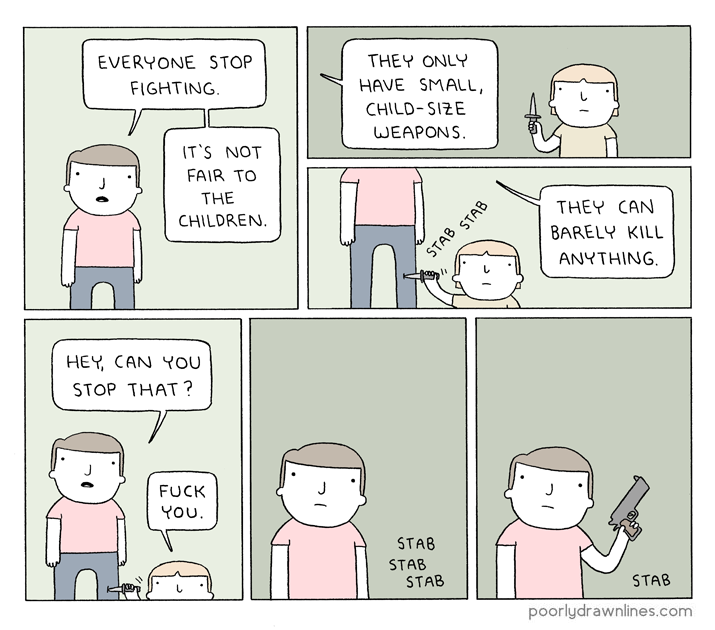
#SS2ZVB
(0)
/ @anonymous / 4222 дня назад

Ещё раз напомню, что символом празднования является мак. Это европейский символ, и все другие ленточки пусть носят в РФ, которая сегодня претендует на то, что она победила во Второй мировой войне. Украина — это страна-победительница и она будет отмечать на самом высоком уровне завершение Второй мировой войны и победу над нацизмом.
#XNQ774
(0)
/ @anonymous / 4222 дня назад
вот вы пишите gcc, gcc. а что происходит на самом деле?
псс, псс! линукс сикает на вас. =)
#T2Y264
(0+1)
/ @anonymous / 4222 дня назад

Цоперайт © 2010-2016 @stiletto.